Permaculture Engineering
The Ultimate Guide for Transitioning to Regenerative Agriculture. A field-tested blueprint from a builder, welder, Navy engineer, and Advanced Permaculture Design Specialist who built and sold a 40-acre homestead at double its purchase price using the exact method inside this book.
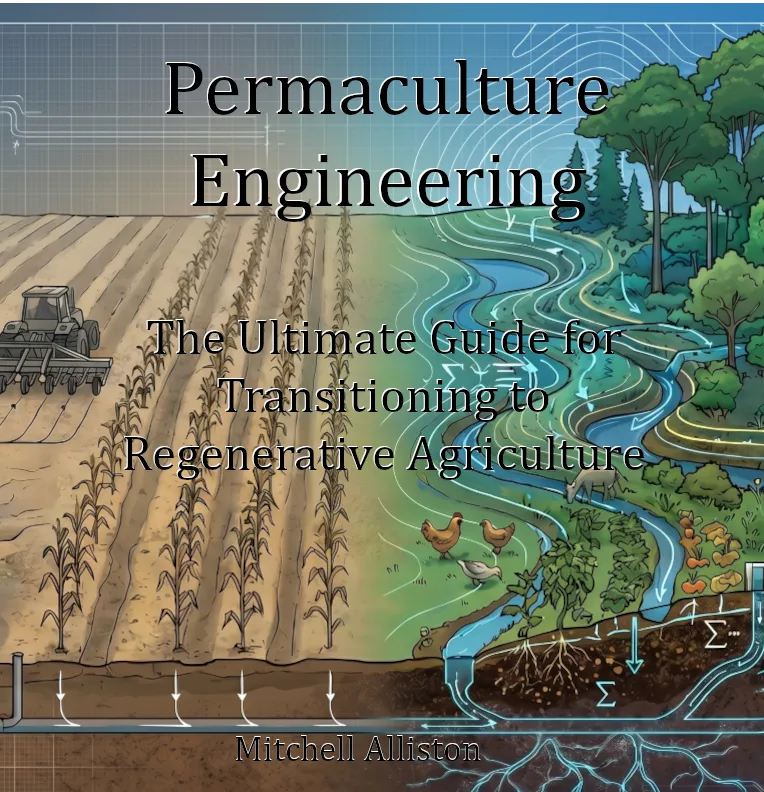
Who This Book Is For
This book is for the person standing on a piece of ground asking the right question: how do I transition this land from extractive to regenerative, from declining to compounding, from costly to abundant, and how do I do it without going broke in the middle?
A homesteader or small-scale farmer building from raw or worn-out land
A conventional grower ready to transition to regenerative practices
An engineer, contractor, welder, or builder adding permaculture to your toolkit
A landowner planning earthworks, ponds, swales, food forests, or silvopasture
A student of Mark Shepard, Stefan Sobkowiak, Geoff Lawton, or Matt Powers who wants the engineering backbone the rest of the field leaves out
Anyone who wants the math, mechanics, and business numbers behind the principles, not just the philosophy
The book of Proverbs says, "Know well the condition of your flocks, and give attention to your herds." This book is about knowing your land that well, then engineering the transition with the precision it deserves.
What You'll Learn
By the end of this book you'll be able to:
Apply the Scale of Permanence to every decision so you build in the right order and stop wasting money fixing what should have come first
Read a piece of land the way a hydrologist, soil scientist, and ecologist would, then translate what you see into a working design
Lay out swales, keyline patterns, ponds, dams, and drainage that hold water on the landscape instead of losing it downhill
Calculate cut and fill, slope, and storage volume so your earthworks actually perform under real storms
Build soil systems that compound in fertility year after year
Integrate animals, perennials, annuals, and infrastructure into one self-reinforcing whole
Use engineering troubleshooting and first-principles thinking to diagnose what's actually failing on your land instead of treating symptoms
Run the financial and business numbers so the operation is profitable, not just beautiful
Phase a real transition from conventional to regenerative without losing your shirt
About the Author
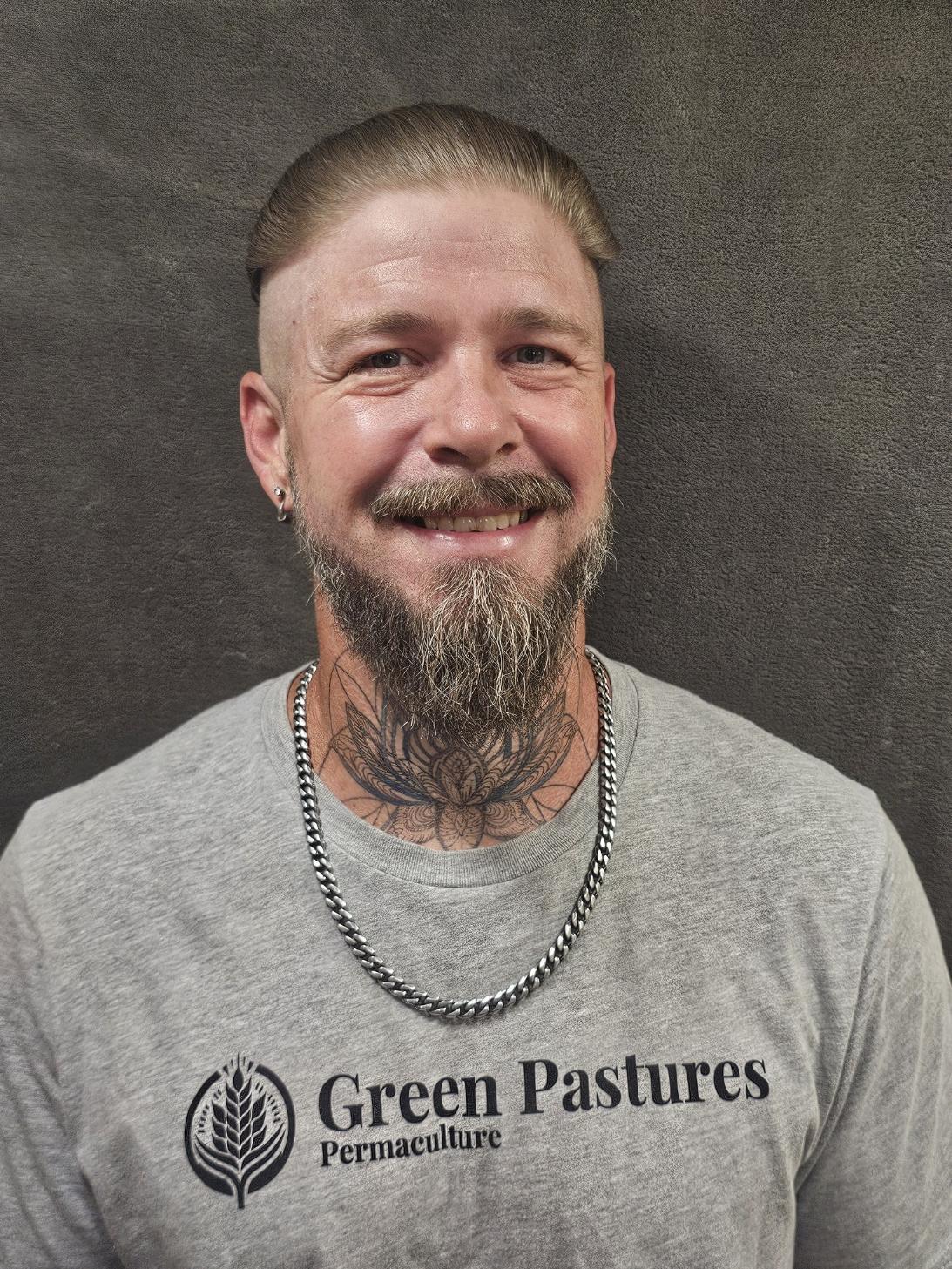
Mitchell Alliston is the founder and president of Green Pastures Permaculture, a regenerative land design and education nonprofit based in Gravelly, Arkansas, serving landowners and farmers across a 200-mile radius of the Ouachita region.
His background is unusual on purpose. Thirty years in wood-frame and steel-frame construction, eventually as an iron-working foreman. Twenty-five years as a certified structural welder. Two-time Distinguished Military Graduate in the United States Navy as an Interior Communications Technician and engineer. Twenty years restoring high-end hot rods. Fifteen years growing food and operating aquaponics. Four years building a 40-acre permaculture homestead practically single-handed and selling it for double the purchase price.
On top of that hands-on resume, he is an Advanced Permaculture Design Specialist and a Certified Nutritionist, and a member of the Waldron Chamber of Commerce and Arkansas Floodplain Management Association.
The method he developed and now teaches, Permaculture Engineering, is the integration of all of it: regenerative design principles, the Scale of Permanence, engineering troubleshooting to first principles, and the financial discipline of a profitable, working business. This book is that method, written down.
The work is rooted in a simple conviction: land entrusted to us should be left more alive, more productive, and more beautiful than we found it.
Inside the Book
First Principles and the Scale of Permanence, the philosophical and engineering foundation
Reading the Land, climate, topography, water, soil, and existing systems
Water First, swales, keyline, ponds, dams, and drainage engineered to last
Earthworks and Access, the unglamorous decisions made once that determine everything after
Building Soil That Builds Itself, biology, minerals, cover, and rotation
The Living Systems, food forests, silvo-pasture, annual zones, and animal integration
Diagnosis and Troubleshooting, root-cause analysis when the system isn't performing
The Business, financial modeling, profitability, and the transition plan
Putting It Together, phased implementation, budgets, and long-term stewardship
Get on the Presale List
The book launches soon. Join the presale list to lock in 10 percent off when you prepay your order, plus early access to the digital edition and the first batch of print copies shipped before general release.
Choose Your Path
The Book - $49.95
Digital and print editions. The complete guide to transitioning your land.
Use code PRESALE10 at checkout for 10 percent off when prepaying.
Book + Design Toolkit - Coming Soon
Book + Design Review Call - Coming Soon
The book, the toolkit, and a 90-minute design review call with Mitchell to pressure-test your transition plan. Pricing to be announced.
Frequently Asked Questions
Do I need an engineering background to use this book?
No. The book is written so a motivated beginner can apply it, with worked examples that walk you through the calculations and decisions step by step.
Is this book useful outside Arkansas and the Ouachita region?
Yes. While Mitchell's experience is rooted in the Ouachita region, the Scale of Permanence and engineering method in the book apply across climates and conditions.
Can I use this if I'm transitioning from a conventional operation?
Yes. The book covers a phased approach for converting a conventional row crop or livestock operation into a regenerative one without losing income during the transition.
Is it available in print or digital?
Both. The book is offered in digital and print editions. Digital copy is included with physical book.
Do you ship internationally?
No. Print shipping is currently limited to United States addresses. Digital editions are available worldwide.
What is your refund policy?
A 30-day refund is offered on every purchase, no questions asked.
Do you offer bulk or wholesale pricing?
Yes. Orders of 10 or more copies receive a 15 percent discount. For bulk orders, please email [email protected].
Engineer the Transition
If you're ready to transition your land to regenerative agriculture with the rigor it deserves, this book is your blueprint.
Use code PRESALE10 at checkout for 10 percent off when prepaying.